A Christmas wedding works best when the seasonal atmosphere is supported by practical decisions about travel, temperature, daylight, and holiday commitments. Choose the parts of the season you both enjoy, then make the schedule and guest information clear. Evergreen details and candlelight are optional; guest comfort is a stronger foundation.
Decide what Christmas means to your celebration Discuss whether your wedding will be religious, secular, or shaped by different family traditions. A December date does not require a Christmas theme, and a Christmas theme does not mean every guest shares the same beliefs. Choose language and ceremony elements that fit your relationship and your setting.
Write a short style brief before buying decorations. You might prefer winter greenery and warm linen, a formal evening with metallic accents, or a quiet lunch with a few seasonal flowers. Keeping the brief specific helps you avoid adding every recognizable holiday motif to the same room.
Ask the venue about existing decorations Visit at the relevant time of year if possible, or ask for recent photographs of the seasonal setup. Check when decorations go up, whether they change, and which pieces can be moved. A venue's tree, garlands, or lighting may work with your ideas, but they may also affect space, sightlines, and photography.
Confirm flame rules, electrical access, hanging restrictions, and who handles removal. Do not plan around candles until you know the permitted type and placement. Battery lighting may be a useful alternative in some settings. Ask to see the room after dark rather than judging the evening atmosphere only from daylight photographs.
Plan for the actual weather and light Winter conditions differ greatly by location, and Christmas falls in summer in parts of the world. Base your plan on the place and date rather than on an image of snow. Ask local suppliers about realistic travel times, sheltered routes, and the daylight available for your preferred photographs.
Create an indoor version of any outdoor moment. Check whether coats can be stored, entrances stay dry, and guests can move between spaces without long exposed waits. If steps or paths may become slippery, ask the venue how they are maintained and who is responsible for the decision to change the route.
Give travel information early Holiday periods may compete with family plans, school schedules, work commitments, and accommodation demand. Share the date as soon as your arrangements are firm enough to do so. Provide accurate location and timing information so guests can decide what is manageable without feeling pressured to explain a decline.
Ask transport providers about the exact service on your date, including the trip home. Do not assume a normal timetable. If you arrange a shuttle, give the pickup point, departure time, booking method, and contact details. Explain whether the last departure is flexible or fixed so guests can make an informed choice.
Build warmth into the guest experience Ask the venue about heating before guests arrive, not merely the thermostat setting once the room is full. Check any separate ceremony room, restroom route, and waiting area. Offer a place to sit during gaps and make drinking water easy to find alongside any hot drinks.
A blanket basket can be a thoughtful extra, but it should not substitute for a warm, suitable space. If you provide food or drinks with seasonal flavors, label ingredients and confirm dietary needs with the caterer. Festive hospitality can be generous without assuming everyone drinks alcohol or enjoys the same foods.
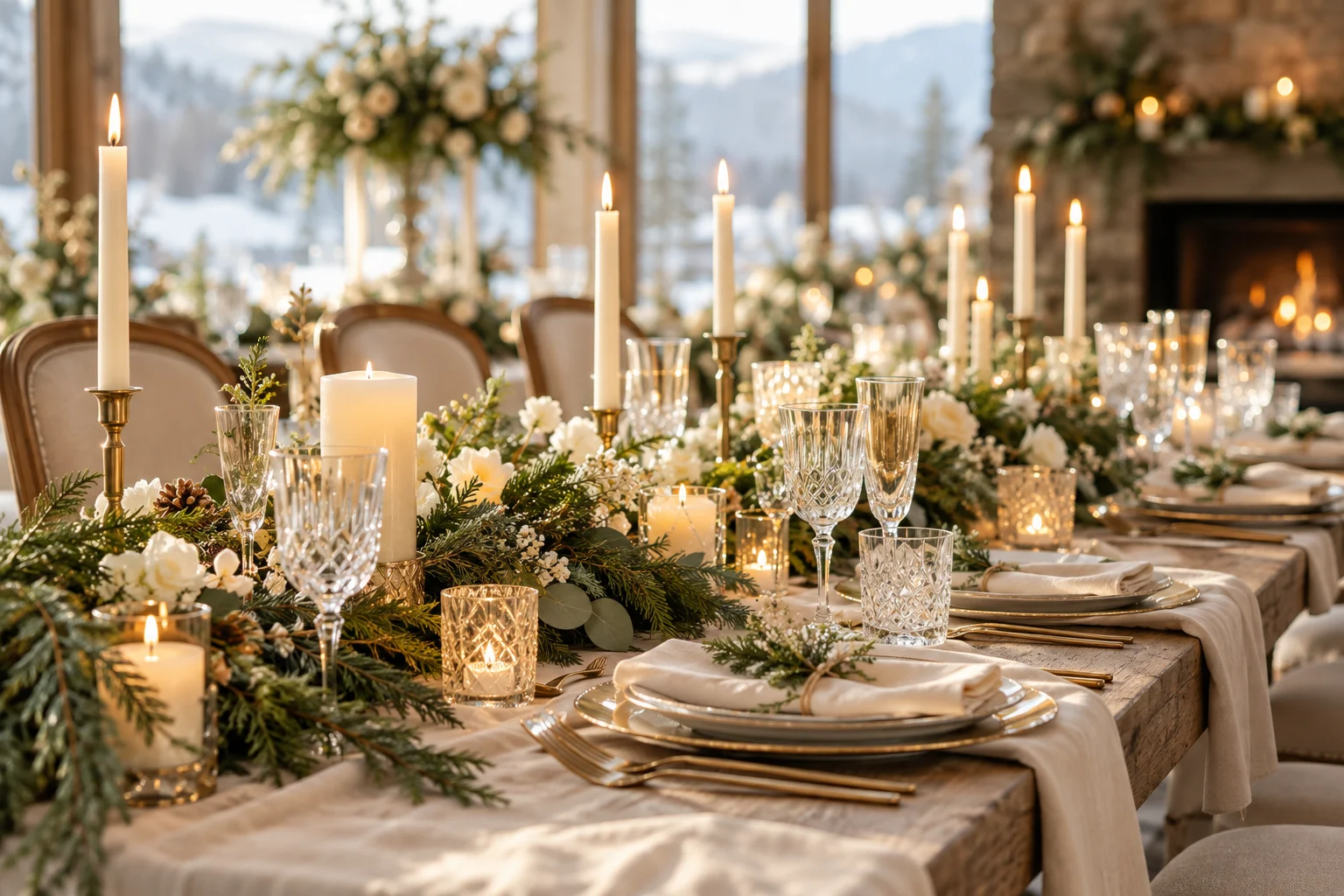
Choose a restrained seasonal palette Pick a few materials and repeat them with care. Ivory linen, deep green foliage, and warm metal can create a coherent setting without literal Christmas symbols at every place. A small amount of ribbon or colored glass may be enough to connect the tables with the ceremony space.
Ask florists which materials are practical and available for your location and date. Avoid treating all evergreen plants as interchangeable or safe for every use. Your florist and caterer should advise on materials near food, candles, children, or animals. Attractive styling still needs a practical installation plan.
Write ceremony words that fit the couple A seasonal reading can refer to light, shelter, generosity, or the promise of a shared home. If faith is part of the ceremony, agree on the text with your officiant. If guests come from different traditions, a short introduction can explain why a particular passage matters to you.
An original secular example is: “May our home hold warmth for one another, room for the people we love, and patience for the days that ask more of us.” This is illustrative wording, not a traditional blessing or a quotation from a historical source. Adapt it to your own promises.
Protect the day from holiday overload Give the wedding its own identity. You do not need gifts for every guest, a themed dress code, an elaborate favor, and a seasonal entertainment program simply because the date is festive. Choose the details that create a better experience and let the rest remain part of the wider holiday.
If children attend, ask parents what would help during the meal or speeches. If guests have traveled far, a clear finishing time and an easy departure may be more welcome than another activity. Good hosting often means removing a difficulty rather than adding a decorative feature.
Run a winter-specific final check Confirm the weather decision, indoor photo location, heating, coat storage, transport home, and supplier arrival plan. Give the responsible person a concise contact sheet. Pack any layers and spare shoes you intend to use, then check that they can be reached without unpacking the entire dressing room.
The most memorable seasonal detail may be the feeling of being comfortable and welcomed. Build the celebration around that feeling, then use flowers, music, and words to express the version of Christmas or winter that belongs to you both.